
The uncomfortable truth about UK gym memberships
The data on UK gym membership is brutal if you actually look at it. Most people who sign up don’t go often enough to see results. The average gym member visits roughly four times a month and stops their membership within twelve months. Of those who keep paying, a large share have stopped attending entirely, the membership is a polite tax on the intention to train, not the act of it.
The reason isn’t laziness or lack of willpower. It’s structural. A commercial gym membership gives you access to equipment. It doesn’t give you a programme. It doesn’t give you coaching. It doesn’t give you accountability. It doesn’t give you anyone to notice whether you turned up or not.
For people who already train independently, who know how to programme, who progress lifts deliberately, who don’t need a coach to call them in, a gym membership is brilliant. It’s flexible, it’s cheap relative to coached training, and it does exactly what it’s supposed to do.
For everyone else, paying £40 to £70 a month for an empty room with weights in it is a stunningly inefficient way to try to change your body. Coaching-led small group personal training sits in a different category entirely, and once you understand what each one actually delivers, the comparison stops being about price.
A gym membership gives you access to equipment. It doesn’t give you a programme, coaching, accountability, or anyone to notice whether you turned up.
What a gym membership actually delivers (and what it doesn’t)
It’s worth being precise about what a commercial gym membership actually includes, because most of the marketing implies more.
What you do get
- Access to equipment. Machines, free weights, cardio, often a pool or studio for classes.
- Wide opening hours. Most chains run 06:00 to 22:00 or longer.
- Flexibility. Train when you want, where you want, no booking required.
- Group fitness classes. Body Pump, spin, yoga, HIIT, usually included.
- An induction. One free session at sign-up showing you how to use the equipment.
What you don’t get
- A programme. Nothing tells you what to do today, this week, this block. You’re on your own.
- Coaching. The gym floor isn’t coached. The induction doesn’t cover technique progression.
- Accountability. Nobody texts you when you haven’t been in for two weeks.
- Progression. Equipment doesn’t programme itself. You’ll progress fast for six weeks and then plateau.
- Community. Most large gyms are anonymous on purpose, nobody knows your name and nobody asks about your week.
If that list of “don’t get” matches what you actually need to make training stick, then the gym membership isn’t the right product for you, regardless of how cheap it looks per month. You’re paying for the wrong thing.
Where small group PT fundamentally outperforms
Coaching-led small group personal training isn’t a tier-up gym membership. It’s a different product. Here’s where it changes the equation.
Programming
Every session is part of a programmed block. You aren’t designing your training; a coach has. The programme moves over six to twelve weeks, you progress strength lifts, build conditioning, then test outputs. The work compounds. You don’t plateau at six weeks because the programme accounts for plateau and pushes through it.
Coaching on every lift
Every session, every member, observed. A coach watches your set-up on the bar, your bracing under load, your tempo, your depth, your knee tracking. They cue you in real time. Two months in, you’re lifting better than members who’ve been in commercial gyms for two years, because nobody ever told them their squat was shallow.
Built-in accountability
Sessions are booked. You’re expected. If you miss two in a row, your coach asks why. That sounds small until you realise it’s the difference between training fifty times a year and training a hundred and fifty times a year. The compounding effect over a decade is enormous.
The room itself
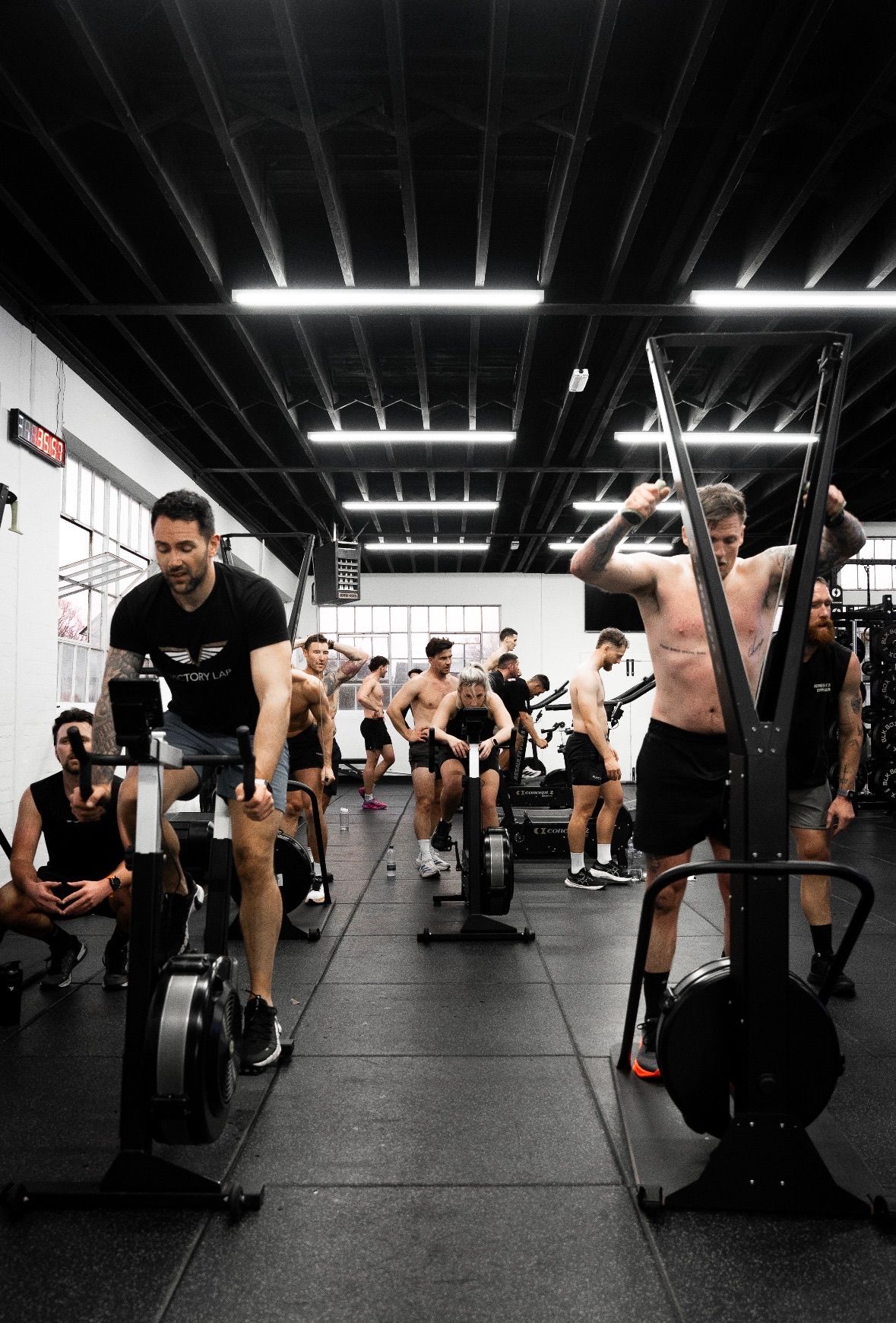
Training in a room with four to seven other people who showed up to do the same hard thing is a completely different experience from training next to someone on their phone between sets. You push harder than you’d push alone. You stay later. You progress faster. Group energy is real, and it’s actively designed into how we coach.
Knowing your coach (and your coach knowing you)
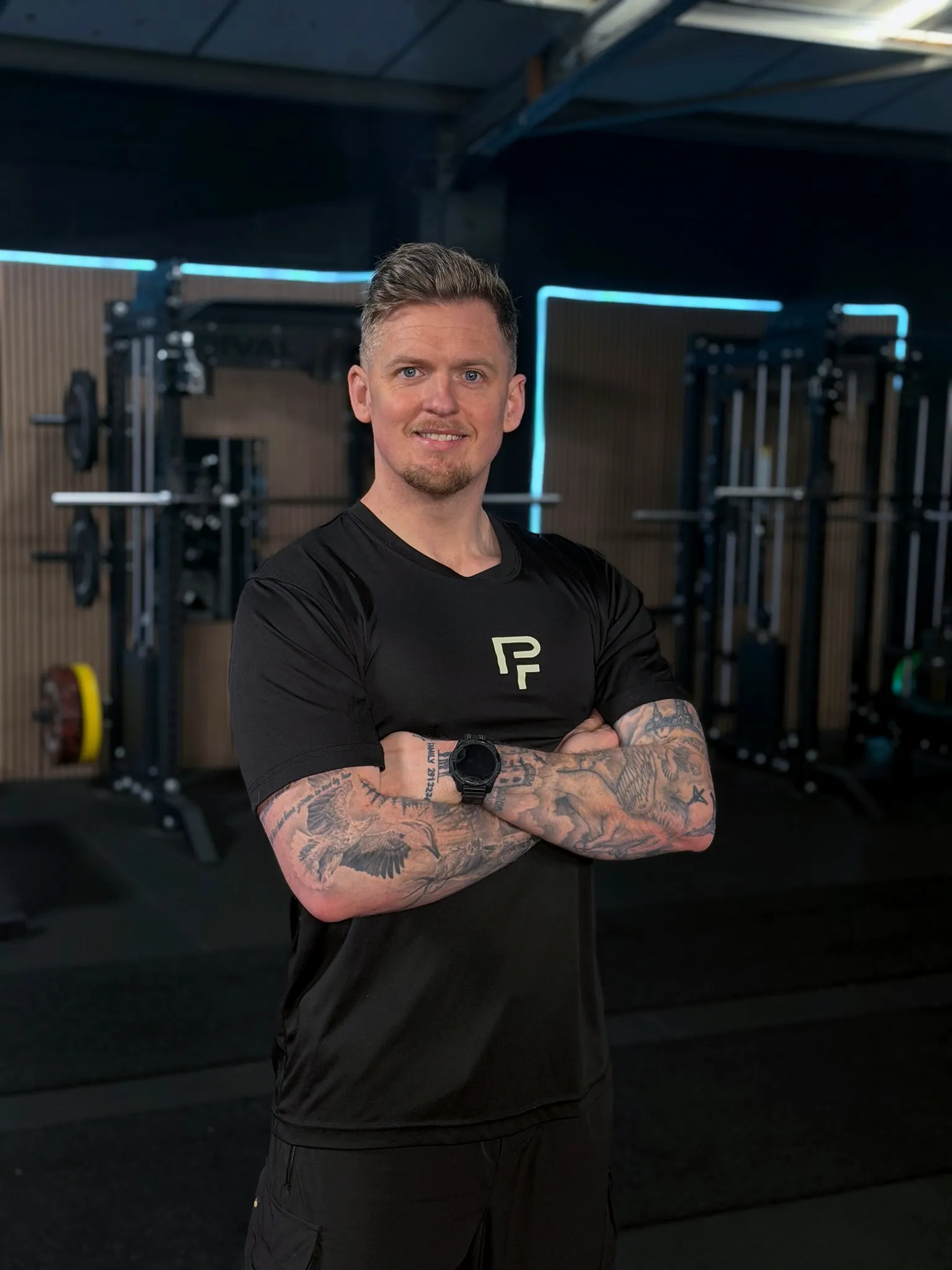
After a few weeks, your coach knows what your set-up looks like when you’re moving well and what it looks like when something’s off. That continuity is impossible in a 5,000-member gym where you might see the same staff member twice a year. Coaching depends on someone knowing you, and a small group studio is built around that knowing.
Small group PT vs one-to-one PT
One-to-one personal training works. The attention is total, the programme is bespoke, the feedback is immediate. The catch is price.
In Leamington Spa, one-to-one PT typically runs £50 to £75 per session. Two sessions a week means £400 to £600 a month, £5,000 to £7,000 over a year. The progress is real, but the financial cliff is steep. Most one-to-one PT relationships end when the client’s budget tightens, and the progress goes with it because the client never learned to programme themselves.
Small group PT sits intentionally between commercial gym and one-to-one PT.
You get:
- The programming quality of one-to-one PT.
- The coaching attention of one-to-one PT (with a few seconds’ pause as the coach moves around the room).
- The accountability of one-to-one PT.
- The community of a group.
- Roughly a third of the cost.
That’s why our retention sits where it does. People stay long-term because the maths actually works.
The true cost comparison
Here’s how the three options actually break down over a year, using realistic Leamington Spa pricing.
Commercial gym membership
Monthly cost: £40 to £70 depending on chain. Annual cost: roughly £480 to £840. Average sessions per year (using national data): around 48 to 60. Cost per actually-attended session: £8 to £17. Programming, coaching, accountability: not included.
One-to-one personal training (twice a week)
Per session: £50 to £75. Annual cost: £5,200 to £7,800. Coaching: total. Programming: bespoke. Risk: budget pressure causes most members to stop within twelve to twenty-four months.
Coaching-led small group personal training (Physical Formula)
Monthly cost: matched to you. After a discovery call, a coach recommends how many sessions a week you need and which package fits. Programming: full. Coaching: every session. Accountability: built in. Sessions actually attended per year: typically 90 to 150 (because people show up when they’re expected).
Cost per attended session, small group PT versus a commercial gym, often lands far closer than people expect. But the small group PT session is a coached, programmed, progressing training session. The gym session is “whatever I felt like that day.”
If you assume the goal is “actually change my body and how I train” rather than “own a gym membership,” the calculation isn’t close.
When a gym membership IS the right choice
None of this is to say nobody should have a gym membership. They’re excellent products for the right person. Specifically:
- If you already know how to programme. You write your own training, you progress your own lifts, you’ve done it consistently for years.
- If you train completely independently and prefer it. Some people genuinely want headphones in and to be left alone. That’s a valid way to train.
- If you primarily use the gym for cardio or one specific machine. Pool, treadmill, sauna, if that’s 90% of your use, a membership is perfect.
- If your budget genuinely doesn’t allow coached training. Then a gym membership and a smart self-led programme is far better than nothing, just be honest that the responsibility for results sits entirely with you.
The general public-health framework is well established, the NHS Physical Activity Guidelines remain the canonical minimum-effective-dose baseline. A gym membership absolutely allows you to hit those targets. Whether it allows you to progress beyond them is a different question.
How to switch from gym to coached training
If the comparison has landed and you’re thinking about switching from a commercial gym to coached training, a few practical notes from members who’ve made the same move.
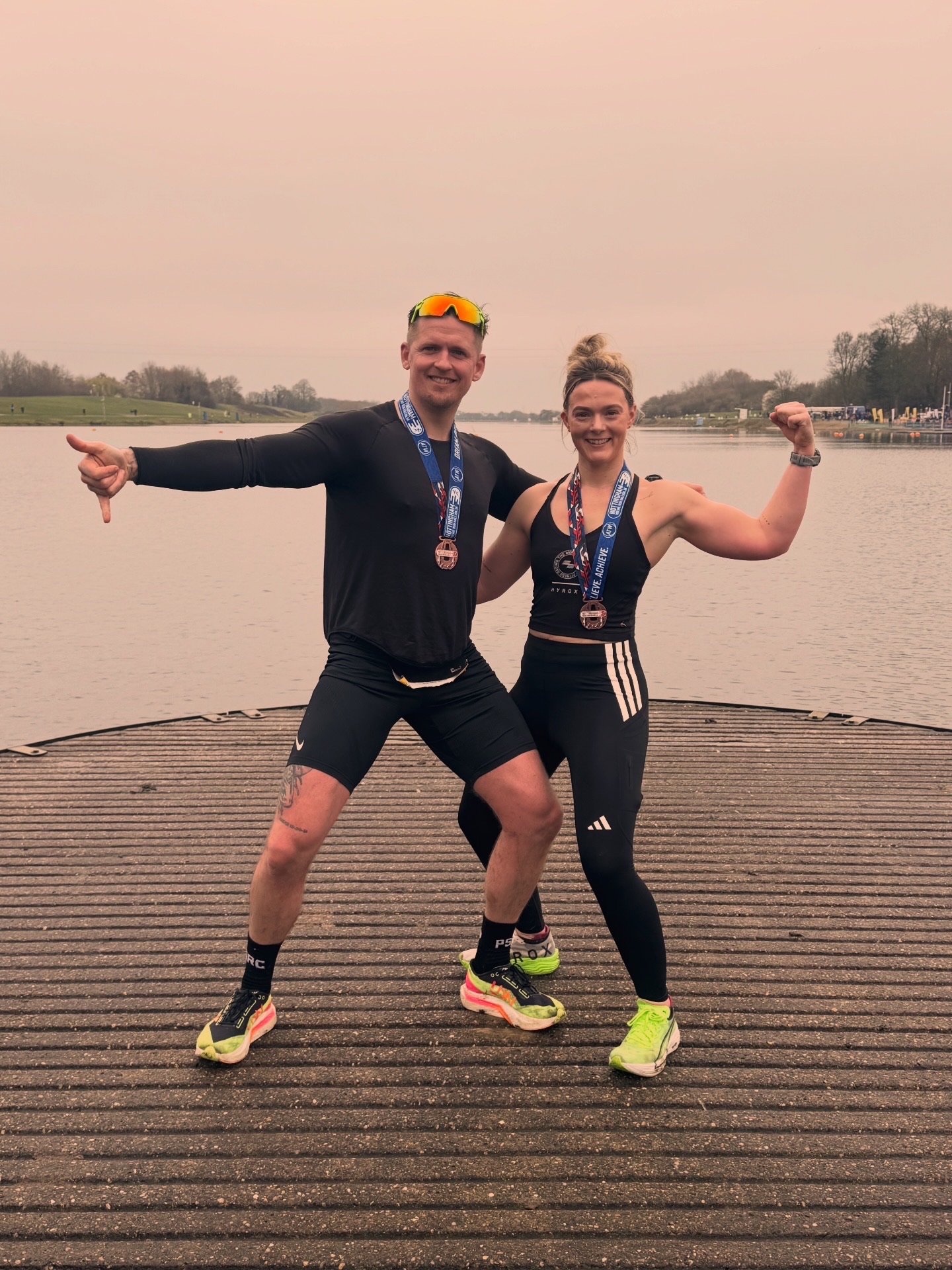
First, the switch is rarely instant. Most people we coach were a member of a chain gym for two to five years before they came to us. The trigger is usually progress stalling, motivation evaporating, or a specific event (a milestone birthday, a HYROX race, an injury that needs proper coaching).
Second, you don’t need to be fit to start. Most new members start somewhere between completely new to training and returning after a gap of a few years. Our onboarding session is designed to put you in the right group at the right level.
Third, the cost shift is usually less than people expect. If you’re currently paying for a gym membership you’re not really using, plus the occasional one-to-one PT block, the move to consistent small group PT often costs about the same per month and delivers dramatically more.
Fourth, the time commitment isn’t bigger. Two coached sessions a week, properly programmed, delivers more than four uncoached sessions a week. You’re trading hours of fumbling for sessions of focused work.
How to start with us
If you want to see whether small group personal training in Leamington Spa is the right move for you, the simplest first step is the getting started page, it walks through our four-step pathway from first enquiry to first session.
If you’d rather just talk first, email info@physicalformula.com with a one-line note about where you’re currently training and what you’re hoping to change. A coach will be in touch within 24 hours.
If you want to understand the gym first, read our overview of coaching-led small group personal training, how we coach, who the coaches are, and who Physical Formula is and isn’t for.