
Why crash diets fail
The pattern is so predictable it’s almost boring. Someone decides they want to lose two stone before a summer holiday or a wedding. They cut calories aggressively, usually by removing food groups, often without much science. They start doing fasted cardio every morning. The weight comes off in week one. They feel proud.
Then week three hits. Energy drops. Sleep gets worse. Workouts feel like crawling. Hunger is constant. Mood is in the bin. Around week six, the wheels come off: one bad day becomes a bad week becomes a return to baseline eating. Within a year or two, much of the weight is back.
This isn’t a failure of willpower. It’s a structural failure. The body is doing exactly what evolution designed it to do: protect itself against a perceived famine. Appetite climbs, energy drops, the system fights the deficit (Rosenbaum and Leibel, 2010). The harder you fight back, the more reliably it wins long-term.
Worse: not all of what is lost during a crash diet is fat (Heymsfield et al., 2014). Some of it is muscle and water, and very low calorie diets strip more muscle than slower ones (Vink et al., 2016). So you can finish twelve weeks lighter on the scale but with less muscle than you started with, a lower metabolic rate, worse body composition, and a body primed to regain weight once normal eating resumes. This is the “skinny fat” outcome.
Sustainable fat loss is a different game entirely. The deficit is gentler, the timeline is longer, the training is heavy, and the wins compound rather than evaporate.
Crash diets don’t fail because people lack willpower. They fail because the deficit is too aggressive, the protein is too low, and there’s no strength training to protect muscle. Fix those, and fat loss becomes boring, in the best possible way.
What a sensible deficit looks like
The general principle is simple: you need a calorie deficit to lose fat. There’s no shortcut around it. But the size and shape of the deficit matters enormously.
A sustainable deficit:
- Loses around 0.4 to 0.7kg per week (Helms et al., 2014), not 2kg or more. Slower than the marketing implies. The pace you’ve probably been told is “too slow” is actually the pace your body will hold.
- Keeps protein high. Roughly 1.6 to 2.2g per kg of body weight per day (Morton et al., 2018). This is the most non-negotiable nutritional lever.
- Keeps training intensity up. The whole point of the deficit is to lose fat, not strength. If training collapses, the deficit is too aggressive.
- Doesn’t require eliminating food groups. No need to cut carbs, fats, gluten or anything else unless there’s a clinical reason. Restriction creates rebound.
- Is built around food you’d eat anyway. Sustainable fat loss is mostly the same food you eat in maintenance, with portion control and a sensible plate composition.
Over six months, a sensible 0.5kg-a-week deficit is roughly 13kg of body weight lost, almost entirely fat if training and protein are right (Sardeli et al., 2018). That’s the kind of result that’s still there in three years.
Protein: the one nutrition rule that matters most
If you remember one thing from this guide, remember this: in a fat-loss phase, protein matters more than any other nutritional choice. More than carbs vs fats. More than meal timing. More than whether you intermittent-fast or not.
Why protein matters so much:
- It protects muscle in a deficit. Higher-protein diets limit the muscle you lose alongside fat, so more of the weight that comes off is fat (Wycherley et al., 2012).
- It’s the most satiating macronutrient. Protein keeps you fuller for longer than carbs or fats (Paddon-Jones et al., 2008), making the deficit easier to maintain without willpower battles.
- It supports recovery from training. The strength sessions that drive sustainable body composition change require protein to recover from.
The practical target most coached members aim for: a fist-sized portion of protein at every main meal, plus a protein-led snack if needed. The exact gram target depends on body weight, but most people are dramatically under-eating protein when they first come to us, often by 50% or more.
Why strength training is non-negotiable
Cardio alone can reduce body fat, but it does little to build or preserve muscle (Willis et al., 2012). The body composition change you actually want (less fat, a more defined shape) also needs lean muscle built or preserved along the way. That requires resistance training.
Here’s the simple framework most members benefit from:
- Two to three strength sessions a week. Coached, progressive, focused on compound lifts (squat, hinge, push, pull, carry).
- Add easy cardio or steps for general energy expenditure. A daily walk is more useful than most people realise.
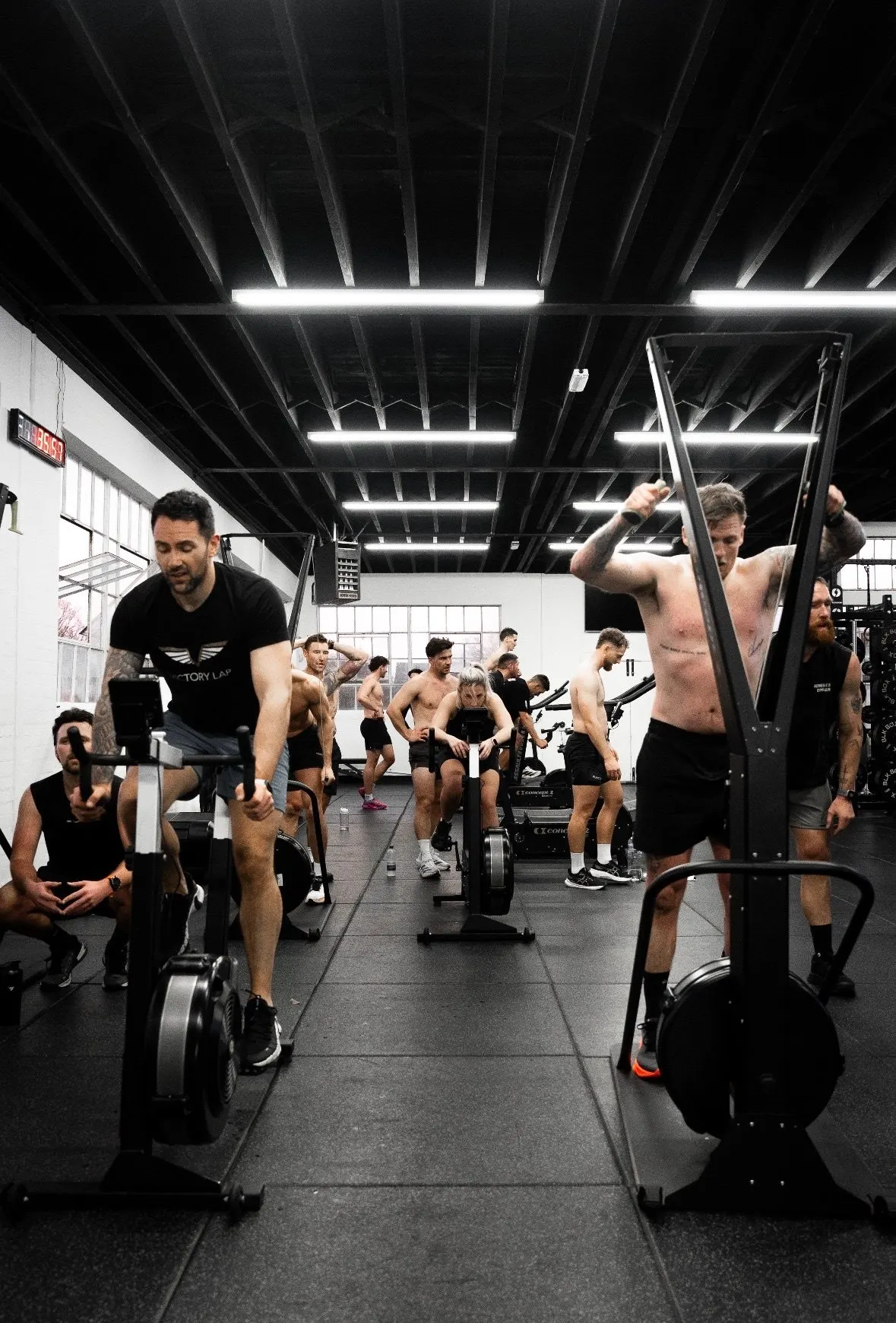
- Optional: one harder conditioning session per week. Mixed-modal work, HYROX-style intervals, a rower piece. Not the foundation; an addition.
A common mistake during fat loss is doing more cardio and less strength. The reverse is the right move. Resistance training during a fat-loss phase preserves muscle and resting metabolic rate (Bryner et al., 1999), and produces the visual outcome people actually want from the deficit. We’ve written a full guide to strength training for women that covers the programme structure in more depth.
The role of cardio (and where it’s overrated)
Cardio isn’t the enemy. It’s useful. But it’s overrated as the main tool for changing body composition, and most people are doing far too much of it relative to strength training.
What cardio does well:
- Burns calories during the session.
- Improves cardiovascular health and VO2max.
- Supports recovery between strength sessions (when easy and aerobic).
- Useful for mood, sleep and stress management.
What cardio does poorly:
- Build or preserve muscle (it does little for either).
- Build a more defined shape on its own (it reduces fat mass well, but adding lean mass needs strength training; Willis et al., 2012).
- Keep raising your daily calorie burn indefinitely (at higher activity levels, total energy expenditure tends to plateau as the body adapts; Pontzer et al., 2016).
The right cardio prescription for sustainable fat loss for most people is closer to “walk every day and do one harder conditioning piece a week” than “an hour on the treadmill, five times a week.” If you’re doing five hours of cardio a week and not seeing the shape change you want, the answer is usually less cardio and more strength, not more cardio.
For a public-health context, the NHS exercise guidelines recommend 150 minutes of moderate activity per week plus muscle-strengthening on at least two days. That’s a sensible baseline. Sustainable fat loss generally sits above it, but not dramatically above it.
Sleep, stress, and the things nobody wants to hear
Two things tank fat loss harder than anything else, and they’re the things people most commonly ignore: sleep and chronic stress.
Sleep. Under-sleeping disrupts hunger hormones (ghrelin up, leptin down), worsens insulin sensitivity, reduces training quality (Craven et al., 2022), and undermines recovery. In one controlled study, people on the same reduced-calorie diet lost less than half as much fat when their time in bed was cut to 5.5 hours instead of 8.5 hours (Nedeltcheva et al., 2010). Sleep is not optional. Most coached fat-loss programmes treat it as the third pillar, after training and protein.
Chronic stress. Long-term high cortisol is strongly linked with abdominal fat, and in people sensitive to it, stress may play a major role in holding on to weight (van der Valk et al., 2018). You don’t need a meditation app, but you do need to find what regulates your nervous system: walking outdoors, lifting heavy, time off screens, time with people who don’t drain you. Treat stress as a fat-loss variable, because it is one.
The habits that compound over years
Sustainable fat loss is downstream of habits, not motivation. Motivation is a finite resource that runs out within weeks. Habits are infrastructure: once they’re built, they don’t require willpower.
The habits we coach members to build, in priority order:
- Train two to three times a week, no negotiation. The sessions are booked. Coached. Expected. This is the single most important habit, because everything else compounds on top of it.
- Protein at every main meal. Not perfect tracking, just “was there a fist of protein on the plate?” Yes most days, fat loss happens.
- Walk every day. 8,000 to 10,000 steps if you can. It adds to your daily energy expenditure, and in a large analysis of 15 studies, adults under 60 who walked more had a lower risk of early death, up to roughly that range (Paluch et al., 2022).
- Sleep 7 to 8 hours, consistently. Treat it as non-negotiable, the same way you treat training.
- Drink water. Even mild dehydration can lower mood and energy (Armstrong et al., 2012). Aim for 6 to 8 glasses of fluid a day, as the NHS recommends, and more if you’re active for long periods.
- Cook at home most of the time. Restaurant food is fine occasionally; daily eating out is hard to maintain a deficit through. Most coached members aim for 75 to 80% of meals home-prepared.
- Don’t weigh yourself daily. Weekly average, photos every four to six weeks, clothes that used to be tight. Even weighed at the same time each morning, the scale can move by around half a kilo from one day to the next, mostly through shifts in body water (Schneditz et al., 2023), for reasons that have nothing to do with fat loss.
None of this is dramatic. None of it photographs well. None of it produces a transformation story you’d see on a magazine cover. But over twelve months, applied with average consistency, it produces sustainable results, the kind you’re still living with in three years.
How to start with us
If you want to approach fat loss the slow, coached, sustainable way, the easiest first step is a free fifteen minute discovery call with a coach. From there, everyone starts with the 6 Week Experience, a coached six-week block that gets you properly started.
If you’d rather understand the gym first, read our overview of how Physical Formula coaches, or our deeper guides on strength training for women and small group PT vs a gym membership.
If you’d rather just talk first, email info@physicalformula.com with a line about where you are with training and what you’re hoping to change. A coach will be in touch within 24 hours.