The gym problem no one really talks about
Half of new gym members have stopped going by their sixth month (Rand et al., 2020). Not because they are lazy, and not because gyms are bad. In our experience, it is because they picked the wrong kind of gym for what they actually wanted.
We see it every week at Physical Formula. Someone books an enquiry after joining, cancelling, joining, and cancelling somewhere else. They have spent hundreds of pounds and hours of frustration, and they have come to the conclusion that they must be the problem. They are not. The environment they picked was.
Leamington Spa is a small town with a surprising number of options. Big-brand budget gyms. Class-focused mainstream chains. Full health clubs. Independent coaching-led studios. CrossFit boxes. Local council leisure centres. All of them work for someone. None of them work for everyone.
This piece is here to help you skip the “join, quit, join elsewhere” loop. We will cover the honest questions to ask yourself before you sign anything, the five broad types of gym you will find locally (yes, including one-to-one personal training, which most guides skip), what to actually try before you commit, and how to know when coaching matters more than choice.
Most people who join a gym stop going within a year (Sperandei et al., 2016). In our experience it is rarely laziness: more often they chose the wrong environment for what they actually wanted.
Start with the honest question
Before you look at prices, opening hours, or membership tiers, answer this: what are you actually trying to achieve, and how much support do you need to get there?
Most people skip this and go straight to the offers. Which is why they join the wrong place.
Some examples of what different goals actually need:
- “I want to lose two stone and feel better in my clothes.” You need structure, accountability, and a coach who understands nutrition alongside training. Solo gym sessions rarely deliver this. You either learn to programme yourself properly, or you find an environment that programmes for you.
- “I want to get significantly stronger.” You need progressive overload managed properly. That means either self-programming from someone who really knows what they are doing, or a coached environment where progression is baked into the plan.
- “I want to train for HYROX, a marathon, or a specific event.” You need sport-specific programming. Generic classes will not get you there. Neither will pottering around the free weights.
- “I want to move more, feel better, and have a bit of variety.” You have far more options. Almost any well-run gym works if you show up consistently.
- “I want to get back into training after time away.” You probably need more coaching support than you think. Coming back after a break is a vulnerable time for injury, because sudden jumps in training load are a likely cause of many soft tissue injuries (Gabbett, 2016). It is also when confidence gets knocked hard if it goes wrong.
- “I want a community of people who train.” You need a smaller, coached environment. Big commercial gyms are surprisingly lonely places.
Notice how many of these point toward coaching rather than facility. That is the key insight the industry does not sell hard enough: for most people trying to change their body, their fitness, or their strength, the coach matters more than the kit.
The five types of gym you will find in Leamington Spa
Broadly speaking, every gym in and around Leamington falls into one of five categories. Each does a specific job well. Each is wrong for the people it is not built for. We have put them in rough order of self-directed to coach-directed, so you can see where you sit.
Type one: budget, self-led
24/7 access. Low monthly cost. Rows of machines and racks. No coaching included, though personal training is available at extra cost. The floor is yours to figure out. Very cheap per visit if you actually go.
Best for: confident lifters who already know what they are doing. People with a strong self-directed programme. Shift workers who need unusual hours. Bodybuilders who want quiet equipment access.
Wrong for: people who do not yet know what they are doing on the gym floor, who need accountability to show up, or who want their training to progress rather than plateau.
Type two: classes-focused, mainstream
Group exercise classes: spin, HIIT, boxing, yoga, sometimes some strength. Moderate price. Wide variety. Instructor-led rather than individually coached. Community atmosphere in the classes themselves, less so on the gym floor between them.
Best for: people who like variety, want the energy of a group setting, and are motivated by structure appearing in the calendar. Great if fitness is one of many things you enjoy.
Wrong for: people who want their strength or sport-specific training progressed properly over months, or who need individual attention on movement quality.
Type three: health club, lifestyle
Gym plus pool plus classes plus spa plus café. Higher monthly price. The membership is as much about lifestyle as training. Well-appointed, quieter atmosphere, broad member demographic.
Best for: people who want fitness to be part of a broader wellness lifestyle. Families. People who value the pool as much as the weights. Those who like the setting more than they love the training itself.
Wrong for: people whose primary goal is a specific training outcome. You are paying for facilities you may not use.
Type four: coaching-led, small group personal training
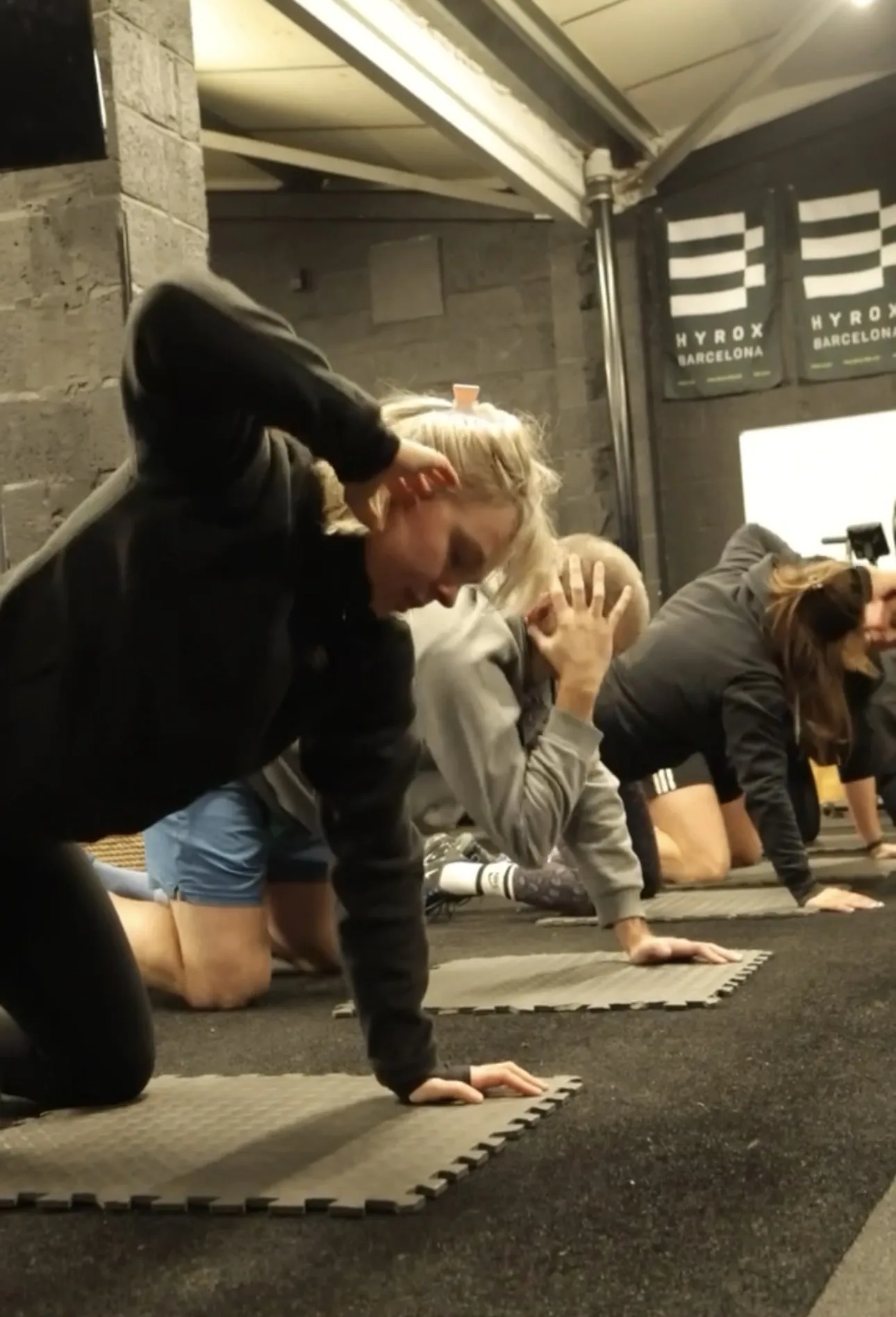
Structured, programmed training in small groups of four to seven people, led in person by a qualified coach from start to finish. Programming is scaled to the individual, not just the group. Higher monthly price than a budget gym, meaningfully lower than one-to-one personal training. No self-led floor. Every session is coached.
The part most people underestimate before they try it: the community is built in. Because the room is small and cohorts turn up week after week, you end up training alongside the same faces every session. Names get learned. Wins get shared. If you miss two sessions in a row, someone actually notices. That kind of tribe is impossible in a 5,000-member commercial gym, and it is a huge part of why coached members stay for years.
Best for: people who want their training to actually progress. People new to structured training who need to build confidence. Returners after time off or injury. Those with specific goals on a timeline. Anyone who wants both real coaching and a real community, not one without the other. Anyone who has tried the other options and found themselves plateaued or lonely.
Wrong for: people who want maximum equipment access at cheapest cost. People who prefer to train alone and figure things out themselves. People who do not want a coach’s eye on their form.
Type five: one-to-one personal training
Total attention, bespoke programming, immediate technique feedback. The most expensive per session locally, typically £60 to £95 an hour in Leamington. Some coaches run it out of a commercial gym, others out of a dedicated studio. The value is undeniable if you genuinely need the individual work.
Best for: people rehabilitating an injury, pre and post-natal training, elite performance goals on a tight timeline, or anyone with the budget who genuinely trains better one-to-one than with others in the room.
Wrong for: most people, honestly. On a per-session basis it’s the gold standard, but the price tag is why so many one-to-one PT relationships end at twelve months. Coaching-led small group PT was invented precisely to give people 80% of the benefit at closer to a third of the cost.
What to actually try before you commit to anything
Whatever type of gym you are leaning toward, do these three things before you sign a contract:
Visit at the time you will actually train
A 6am tour tells you nothing about what the 7pm rush looks like. Half of the “quiet, spacious gym” you were sold looks completely different at peak. Ask for a trial visit at the time you plan to be there most.
Ask about a taster session or introductory block
Most gyms offer either a day pass or a short introductory period. Coaching-led places often offer a paid experience block (ours is six weeks) that is specifically designed to test fit before either side commits long-term. Take these seriously. They are the truest test of what a place is actually like.
Trust your gut about the room
Walk in. Notice how you feel. Do the people training look like the people you want to be around? Do the staff notice you, or ignore you? Does the coach or manager ask what you are trying to achieve, or do they just talk about pricing? These are cheap signals and they are usually right.
One thing worth adding: the cheapest gym is often not the cheapest overall. A £15 monthly membership you attend twice before giving up costs you £30 per visit and delivers zero progress. A more expensive coached environment you attend three times a week for two years costs a fraction per session and changes your life. Think about cost per completed session, not cost per month.
The cheapest gym is often not the cheapest overall. Think about cost per completed session, not cost per month.
When coaching matters more than choice
There are a few specific situations where our honest advice is that coaching probably matters more than which specific gym you pick. If any of these sound familiar, you almost certainly want a coached environment rather than a self-led one, regardless of the specific brand.
Returning to training after a break
Whether it has been six months or six years, whether it is from injury, pregnancy, work, or life, coming back is a vulnerable time. It is easy to come back too hard, hurt something, and then bail: sudden jumps in training load are thought to cause a large share of soft tissue injuries (Gabbett, 2016). A coached environment programmes the return properly and stops you being your own worst enemy. Read our returning to training piece for a longer take on this.
Recovering from an injury
Physios can rehabilitate you. Coaches can help you rebuild strength and confidence to move properly again. If you are carrying anything from your back to your shoulder to your knee, unsupervised gym training is a bit of a gamble.
Struggling to stick with self-led before
If you have joined a gym, gone twice, and stopped, the pattern is going to repeat unless the environment changes. The gym is not the problem. The lack of accountability, structure, and coach relationship is.
Being new to strength training entirely
Most people who describe themselves as beginners are actually more nervous than beginner. Two coached sessions build more confidence than two years of copying influencers.
Wanting to get significantly stronger or fitter, not just tired
This is the biggest one. The difference between “workouts” and “training” is a coach, a programme, and progressive overload. If you want to genuinely change your capacity, coaching matters.
If none of these apply and you are a confident, self-motivated lifter with a good programme, honestly, a budget gym will serve you brilliantly and save you money. That is a legitimate path and there is no reason to spend more.
Where Physical Formula fits, honestly
We are one specific type of gym: coaching-led small group personal training. Every session is coached in person by one of our team, in cohorts capped at seven. There is no self-led gym floor. There are no classes in the traditional sense. Everything is programmed for the individual, delivered in a small group.
We are the right home for people who want their training to actually progress, want the accountability of a coach, and want to train alongside a small consistent community. Most of our members were “stuck” somewhere else before they came here.
We are absolutely not the right home for people who want a cheap membership with total flexibility, want unlimited equipment access outside of session times, or want to train completely alone at their own pace. All of those are legitimate wants, and there are excellent places locally that serve them well.
The way we work: every new member starts with our 6 Week Experience. It is a paid coaching block, not a free trial, deliberately structured so that both sides can see whether Physical Formula is the right long-term fit. Some people finish those six weeks and join as members. Some finish and decide it is not for them. Both are fine outcomes. It is the honest way to test fit before either of us commits.
How to start with us
If any of the specific situations we covered above sounded like you, or if you have been quietly frustrated with self-led environments and are wondering whether coaching might be the missing piece, we would genuinely like to talk to you.
We only take on members we think we can actually help. So the first step is a free fifteen minute discovery call with a coach to understand what you are trying to achieve, followed by an honest chat about whether we are the right home for it.