Why strength training matters after 40
Here is the honest picture, because most of what you will read online is either alarming or vague. The European consensus on age-related muscle loss describes muscle mass and strength reaching their peak in young adulthood, up to about 40, being maintained through midlife and then declining with age. Beyond 50, researchers have reported losses of around 1 to 2% of leg muscle mass and 1.5 to 5% of strength each year (Cruz-Jentoft et al., 2019).
When that loss goes far enough to affect how you function, it has a name: sarcopenia. It is linked to a higher likelihood of falls, fractures and disability. It is most common in older age but can begin earlier, and physical inactivity contributes to it. The same consensus notes that exercise training and nutrition seem to slow or even reverse the process (Cruz-Jentoft et al., 2019).
The UK Chief Medical Officers place the natural decline in muscle mass and bone density “from around 50 years of age”, and say strengthening activities help to maintain strength and delay it (UK Chief Medical Officers, 2019). Your 40s, then, are the decade to build a reserve, so you reach 50, 60 and beyond with more in the bank.
Your 40s are not the start of a decline. They are your chance to build a reserve for the decades that follow.
Bones need load too
The Royal Osteoporosis Society says that doing both strength and impact exercise is the best way to support bone strength, and that bones lose strength when we are inactive (Royal Osteoporosis Society). The NHS advice on preventing osteoporosis also includes “weight-bearing exercise, strengthening exercises and balance exercises” (NHS).
Balance and everyday strength
The Chief Medical Officers note that “strength training in middle age has a beneficial effect on postural balance”, and single it out as especially important towards the upper end of the adult age range. In everyday terms, that means carrying the shopping in one trip, getting up off the floor without a second thought and lifting a case into the overhead locker. It is the strength you notice most when it starts to go.
Is it too late to start strength training at 40, 50 or 60?
No. It is the question we hear most often on discovery calls, usually asked a little apologetically, and the evidence is reassuring. A Cochrane review of 121 randomised trials with 6,700 participants found that older people who train their muscles against resistance get stronger. They also get better at everyday tasks such as walking, climbing steps and standing up from a chair (Liu and Latham, 2009). Those were older adults, not people in their 40s. If training works for them, it is very much open to you.
The guidance does not stop at a certain age either. For people over 65, the NHS still asks for activities that improve “strength, balance and flexibility on at least 2 days a week” (NHS).
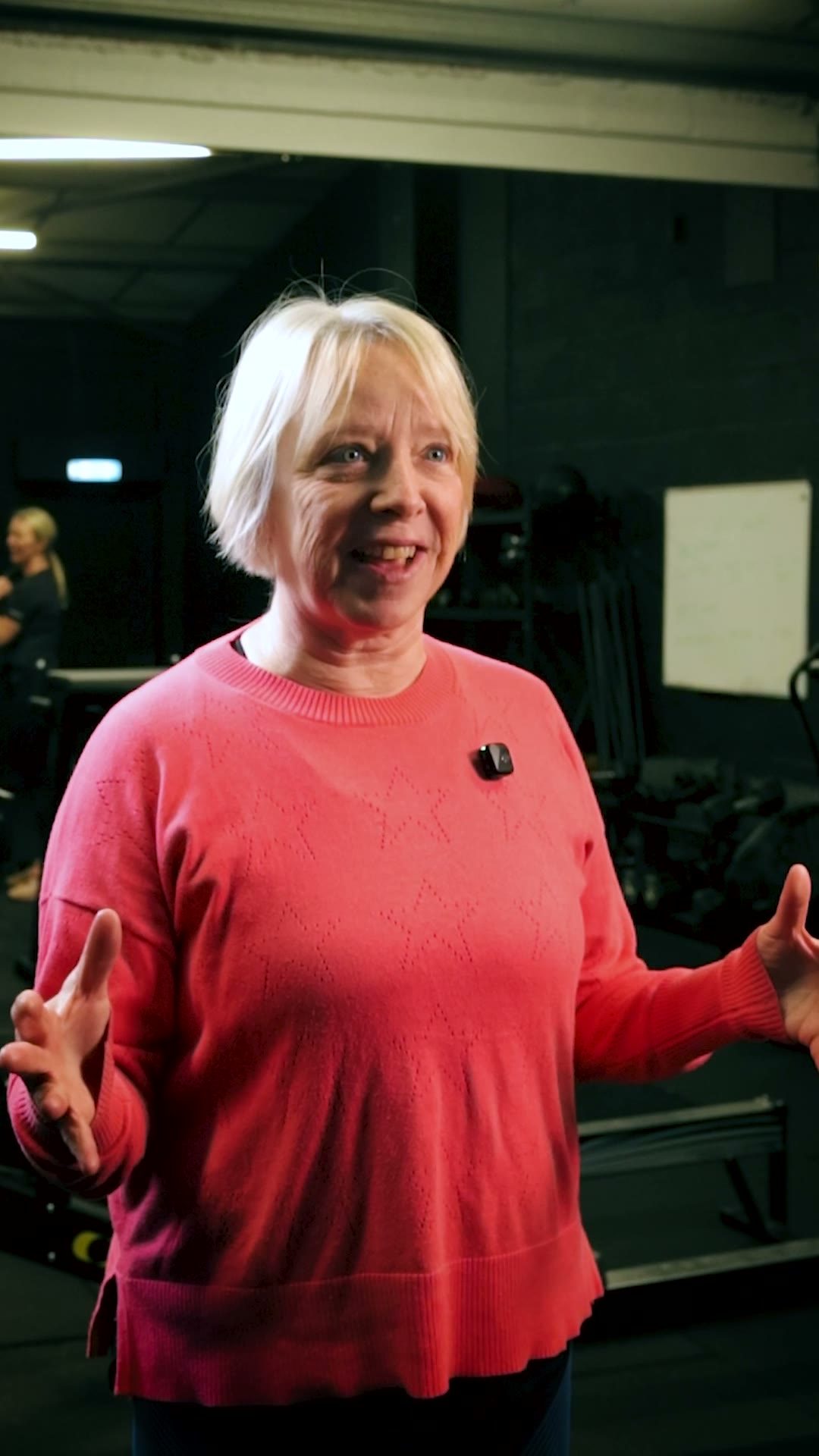
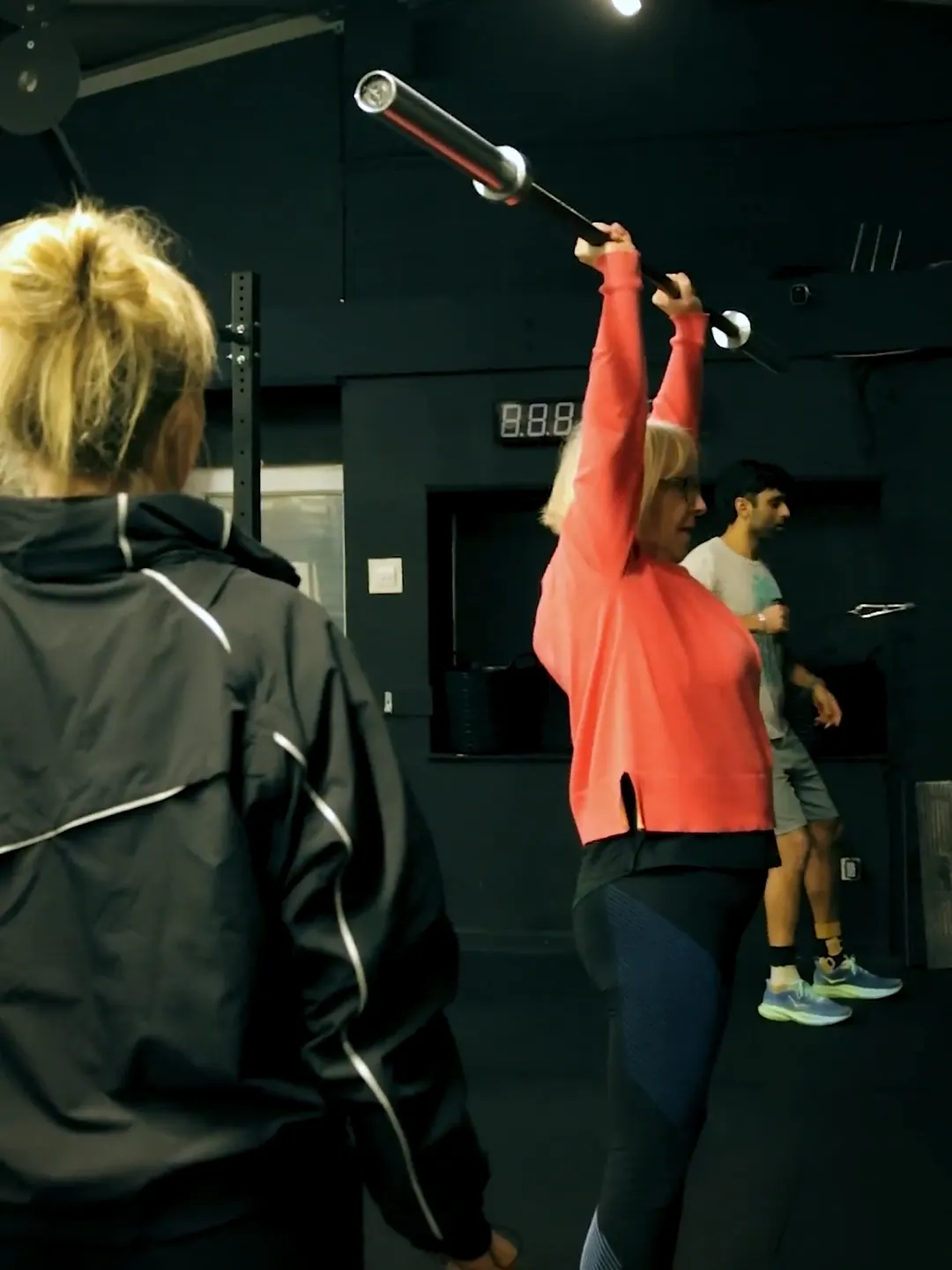
Some of the members who have surprised themselves most started well beyond 40. Henry wrote in his Google review: “I was 56 and well over 18 stone… From the moment I walked in I was made to feel like one of the family. Everything immediately felt different.” Catherine came to us because, in her words, “I felt like I needed to get fitter and healthier for my sixties.” You can watch Catherine’s member story in our menopause guide.
What the UK guidelines actually ask of you
Most adults are not sure. A 2026 report from ukactive found that 73% of UK adults were unaware of how much strength exercise they should be doing, and that one in three did none at all (ukactive, 2026). So here it is, plainly.
For adults up to 64, the NHS recommends strengthening activities “that work all the major muscle groups (legs, hips, back, abdomen, chest, shoulders and arms) on at least 2 days a week” (NHS). Three details matter:
- Effort counts. The NHS says to work “to the point where you need a short rest before repeating the activity”. A weight that never feels challenging is not doing the same job.
- It sits on top of your cardio. Strength work comes in addition to the 150 minutes of moderate activity, or 75 minutes of vigorous activity, that the guidelines ask for each week. It does not replace it.
- Something beats nothing. The Chief Medical Officers are clear that “any strengthening activity is better than none”, whether that means body weight, free weights, resistance machines or bands.
If bone health is on your mind, the Royal Osteoporosis Society gives a more detailed template. Do strength exercise on 2 to 3 days a week with a rest day in between, in sets of 8 to 12 repetitions, building up to 3 sets and working your legs, arms, back and stomach. If you cannot manage 8 reps with good technique, go lighter. If 12 feels easy and you could keep going, go heavier (Royal Osteoporosis Society).
How to start strength training at 40, step by step
The principles are the same at 42 as they are at 62. What changes is how patiently you apply them.
Learn the movements before you load them
Almost everything useful in a strength programme comes from a handful of movement patterns:
- Squat: sitting down and standing up, under control.
- Hinge: picking something up from the floor with a long, flat back.
- Push: pressing a weight away from you or overhead.
- Pull: rowing a weight towards you.
- Single leg: lunges and step-ups, one side at a time.
- Carry: walking tall with weight in your hands.
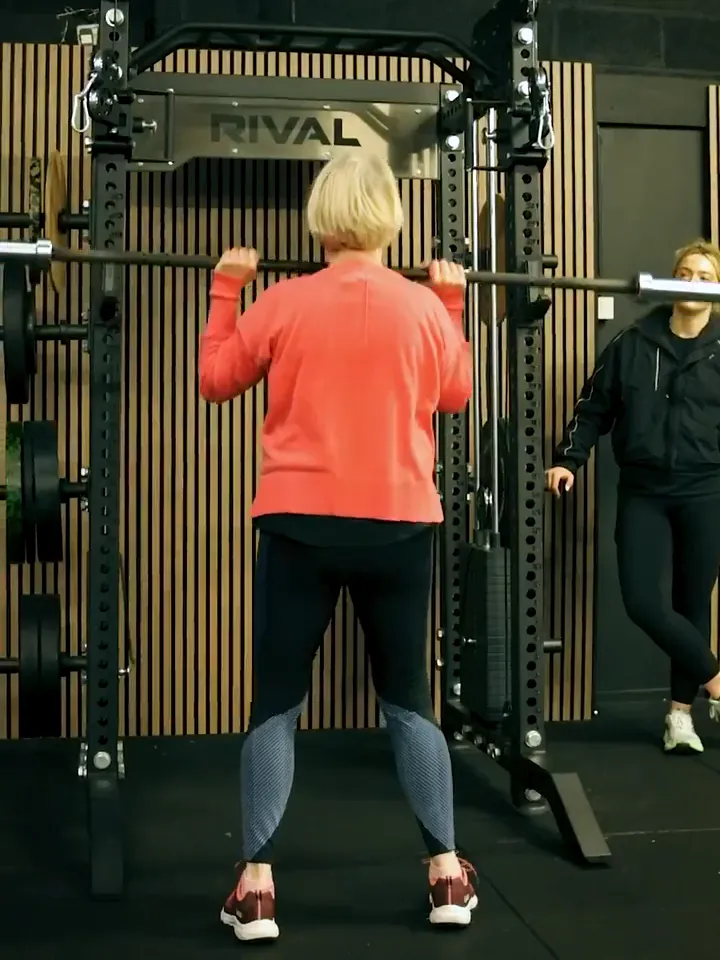
Learn them with body weight, a light dumbbell or an empty bar first. Your early sessions should feel like practice, and that is exactly what they are.
Start lighter than your ego wants
The Chief Medical Officers describe “starting at low durations and intensities and building up over time as the body adjusts” as the safest route back from inactivity. The NHS gives the same advice: “build up slowly” (NHS). The first few weeks are about finding the right starting weight for each lift, not about testing your limits. Heavy can wait.
Two sessions a week, every week
Consistency beats intensity. Two sessions a week that you keep, month after month, will change far more than four a week for a fortnight. Put them in the diary like any other appointment and protect them.
Progress slowly, on purpose
Strength comes from asking a little more of your body over time: a slightly heavier weight, an extra rep, a deeper or cleaner position. Small steps, repeated for a year, add up to a lot.
Get taught, not just told
Technique is where many people over 40 come unstuck, usually by copying a video and hoping for the best. The Royal Osteoporosis Society advises that you “ask a qualified exercise instructor to show you how to lift weights properly”. A good coach watches every rep, adjusts the load on the day and explains why. If you are weighing up where to train, our honest guide to choosing a gym walks through what to look for. If nerves are the real barrier, start with how to feel confident in the gym, starting from zero.
Recovery is part of the programme
Sleep, enough protein through the day and rest days between harder sessions all support the work you do. You do not need to overhaul your diet to start, but those three are worth getting right early.
For men and women over 40
Men over 40
Men often arrive with an old version of themselves in mind: the five-a-side regular, the rugby player, the 25-year-old who could bench a decent weight without warming up. The temptation is to pick up where that man left off. We would gently suggest the opposite. Start with the movements, rebuild the positions a desk job has stiffened, and let the numbers return over months rather than sessions. In our experience, the men who take the patient route are the ones still training a year later.
Women over 40, and menopause
For women, the NHS advice on menopause includes exercising regularly “with focus on weight-bearing exercises to build strength as this can help protect against weakening bones” (NHS). Women’s Health Concern explains that falling oestrogen around menopause reduces muscle mass and leads to greater loss of bone density (Women’s Health Concern, 2026). That is why we wrote a dedicated guide to strength training through menopause, which also goes deeper on protein and recovery. If you have always assumed lifting was not really for you, our guide to strength training for women in Leamington Spa is a good place to begin.
Aches, health conditions and when to see your GP
The NHS is clear, and so are we: “Speak to your GP first if you have not exercised for some time, or if you have medical conditions or concerns” (NHS).
That is not a reason to be put off. The UK Chief Medical Officers found little evidence that physical activity is unsafe for anyone, as long as it is matched to a person’s current activity level, health and physical function (UK Chief Medical Officers, 2019). Matching the work to the person is the whole job of good coaching. The Royal Osteoporosis Society says most people with osteoporosis can exercise safely. It recommends speaking to a doctor or physiotherapist first if you have had many fractures or a spinal fracture, or have a current fracture (Royal Osteoporosis Society).
Tell your coach about old injuries, operations and conditions at the very start, so your sessions are planned around them from day one. And if something hurts, or anything worries you, speak to your GP or physio.
Strength training over 40 in Leamington Spa
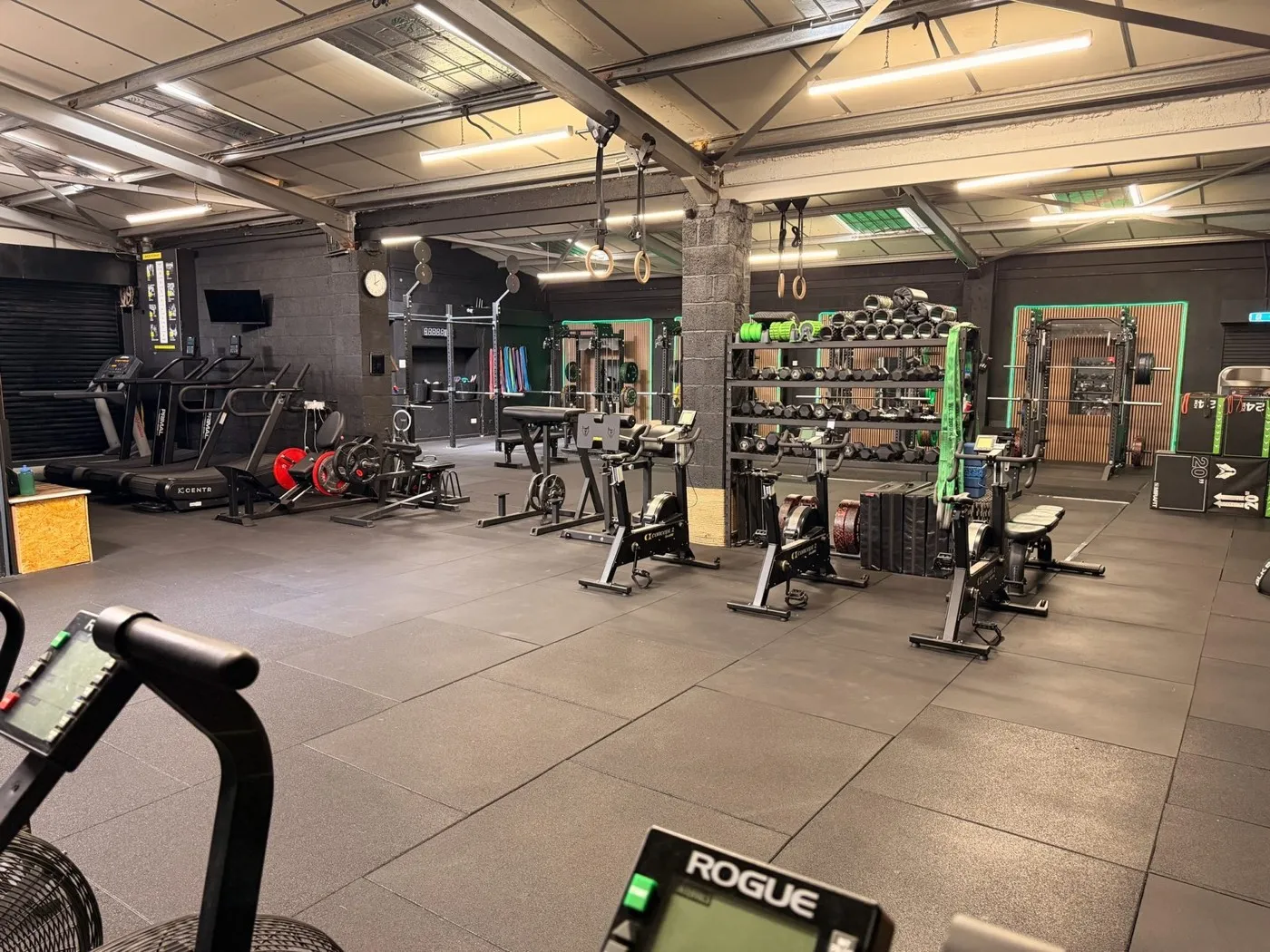
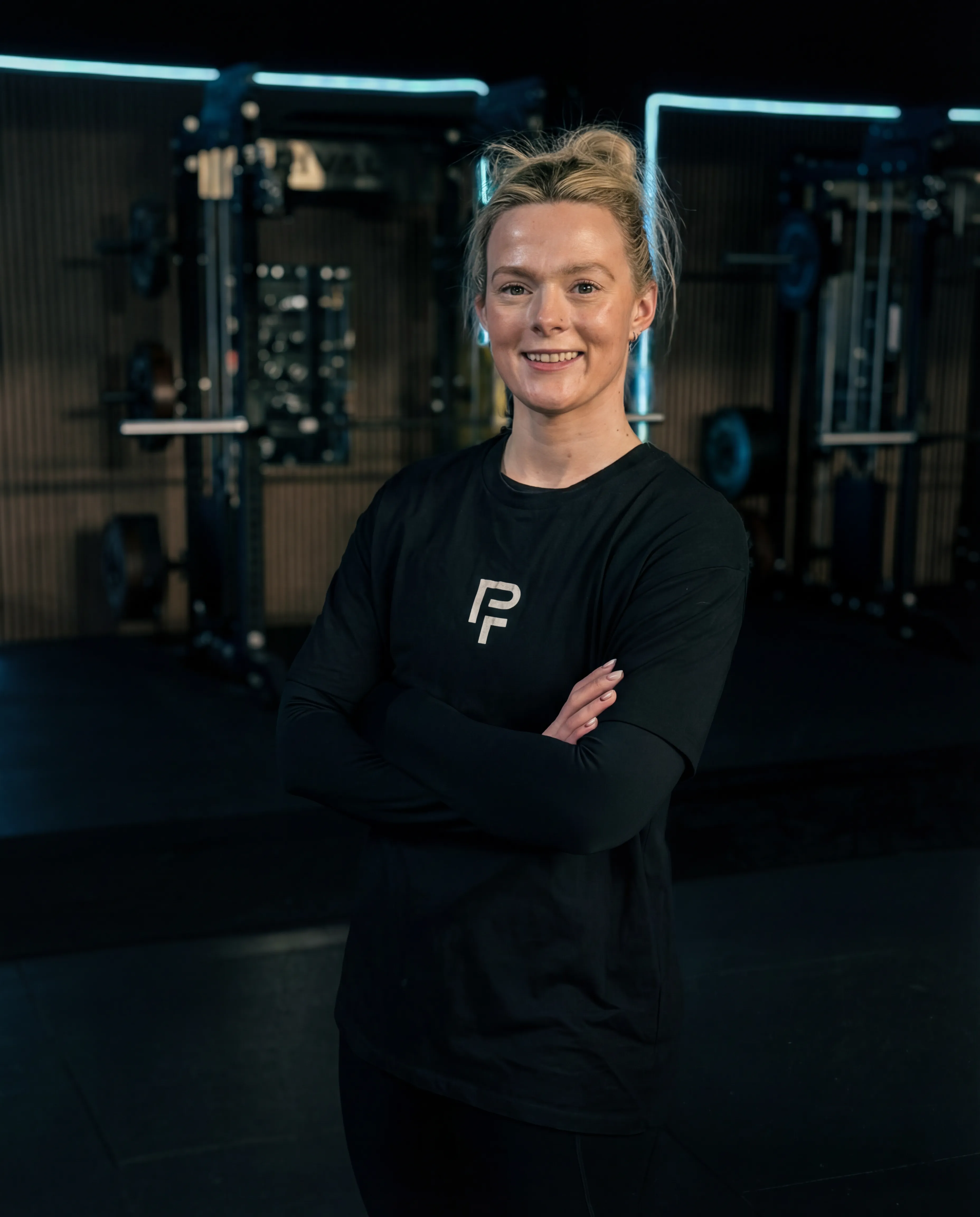
At Physical Formula, every session is coached and groups are never more than six. That cap is the point. It means your coach can see your squat, your set-up and how you are moving on a bad-sleep week, and change the plan on the day. It is the coaching-led small group personal training we have built since we started in 2020, and a good number of our roughly 100 members are over 40.
Catherine put it simply: the coaches are “really careful about how they train someone like me as opposed to someone who’s much younger and fitter and stronger.”
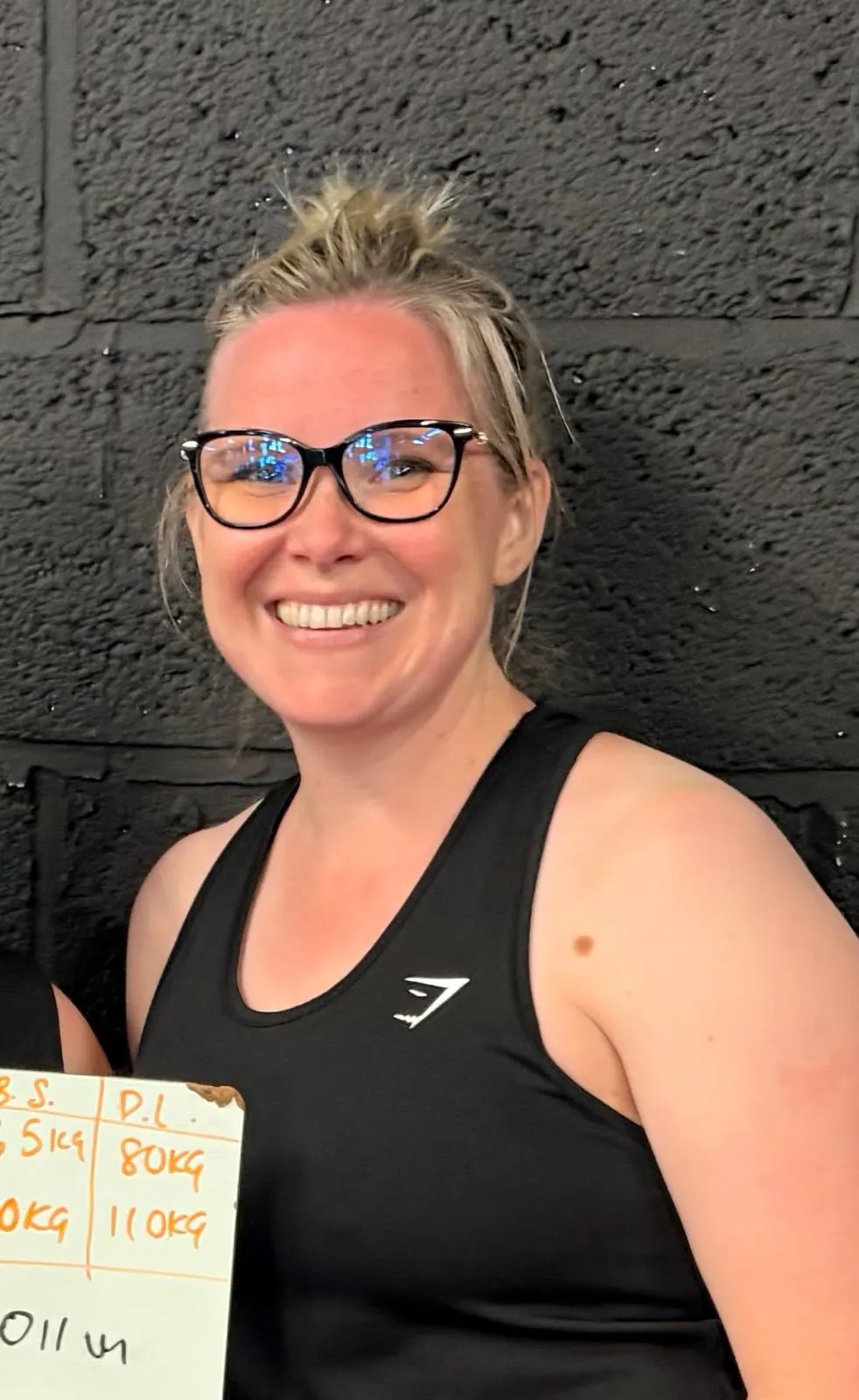
Jen, 44, had been out of training for nearly three years when she joined us. “I had never been in a gym environment like this before,” she says. She also admits, “I honestly thought I’d probably come and do six weeks and then knock it on the head.” Five weeks in, she deadlifted 70kg. In her words: “There’s masses that I can do now that I couldn’t do before.” You can read Jen’s member story in full.
We are at Unit 7E Rigby Close on the Heathcote Industrial Estate, on the south side of Royal Leamington Spa, with free on-site parking and a step-free entrance. We are open 06:15 to 20:00 on weekdays and 07:30 to 12:00 on Saturdays. We are also an easy drive for anyone looking for strength training near Warwick or Kenilworth.
Your first step
Starting is deliberately simple. It begins with a free 30-minute phone call with one of our coaches. It is an honest conversation about where you are, what you have done before, any aches or conditions, and what you would like to be able to do. If we are the right fit, you start with the 6 Week Experience, a paid six-week block of coached sessions in small groups that teaches you the lifts and builds the habit. If we are not, we will tell you and give you an honest steer elsewhere.
If you would rather write than talk, email info@physicalformula.com with a line about where you are and what you would like to change, and one of our coaches will reply.
Whatever age you are reading this at, the best time to start is the next session you can make.