The November pattern
We opened in 2020, which means we have now watched six winters move through this gym. The pattern barely changes. September arrives full of intent. October holds steady. Then the clocks go back, the drive home happens in the dark, and the evening session starts losing arguments it used to win. By the second week of November, the people training on willpower alone begin to vanish. By January they are back, apologetic, starting again from a lower base, and the cycle resets.
If you are somewhere in the 35 to 55 bracket, with work, a commute and a family running your calendar, you will know the shape of it. It is rarely a dramatic quit. It is one skipped Tuesday that becomes two, a tired fortnight that quietly becomes a season.
Here is the part worth hearing: the members who train straight through winter are not more motivated than the people who stop. In six years we have never once watched discipline alone carry someone from November to February. What carries them is structure, and structure can be borrowed, booked and built. That is what this guide is about.
Why willpower fails in the dark
Motivation is a feeling, and feelings respond to conditions. In June the conditions do half the work for you: it is light at 9pm, you have probably seen some sun, and the evening still feels open when you finish work. In November you wake in the dark, commute in the dark and finish in the dark. Your body reads fading light as a signal to wind down. The 5pm flatness is not weakness. It is obedience.
Decision fatigue finishes the job. By late afternoon you have made hundreds of small decisions, and the question “shall I still train tonight?” lands on an empty tank. Any plan that requires you to re-decide every single day will eventually lose, because winter only has to win once for the streak to break, and the second miss is always easier than the first.
You do not need to feel like training in January. You need a plan that does not care how you feel.
So the honest conclusion is this: do not try to feel more. Try to decide less. Everything that follows is a way of taking the nightly decision out of your own hands before the darkness gets a vote.
What actually survives winter
Strip away the hacks and four things reliably keep people training through the dark months. Each one replaces a decision with a default.
A booked session
An intention says “I will train three times this week”. An appointment says “Tuesday, 6pm”. Only one of those survives a cold Tuesday. When the session is booked, the decision was made days earlier by a warmer, better rested version of you, and all tonight’s version has to do is turn up. Our members book their winter slots the way they book the dentist, and treat them with the same seriousness.
A coach who expects you
An empty spot in a capped session is visible. When you train somewhere a coach knows your name, your dodgy knee and your week, not turning up stops being a private decision and becomes a social one. That sounds like pressure. In practice it feels like being wanted, and on a dark evening it is often the whole difference. It is a large part of what a coached session looks like here.
The same seven faces
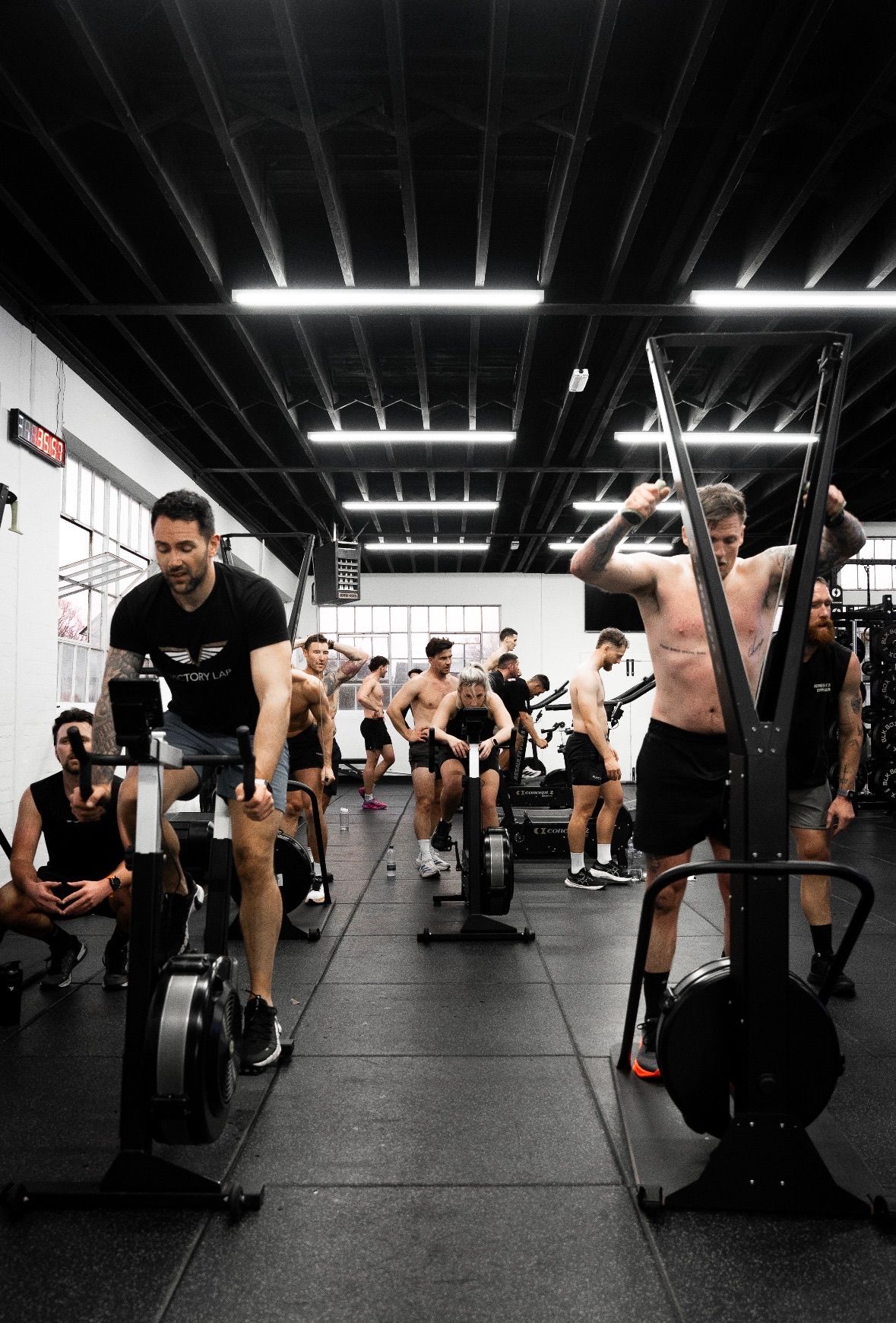
Our sessions are capped at seven, and winter is when that cap earns its keep. Cohorts tighten in the dark months. People notice when you are missing, and people text. Somewhere around late November, “my session” quietly becomes “our session”, and a group is far harder to quit than a plan.

Training that is written for you
Half of winter avoidance is simply not wanting to think. When your programme is written before you arrive, the session asks nothing of your imagination or your organisational energy. You walk in, the plan is waiting, a coach adjusts the detail, and 45 minutes later you have trained. Around 100 members train this way with our three coaches, and it is precisely that thinking-free quality that keeps the room moving in January.
Light, sleep and honest physiology
None of this means winter training feels the same as summer training, and pretending otherwise is how people end up blaming themselves. Expect some sessions to feel flat. Expect the first ten minutes to be the worst part. Expect to want more sleep and, where you can, take it: sleep is training infrastructure, not a rival to it.
Two cheap levers help more than anything sold in January. The first is daylight, early: even twenty minutes outside before noon steadies the body clock that the season keeps trying to drag backwards. The second is a consistent bedtime, because the member who sleeps seven hours trains better than the member who found an extra hour of intensity.
Worth saying plainly: the UK Chief Medical Officers’ guidance of 150 minutes of moderate activity a week, plus strength work on at least two days, does not pause for winter. Your body’s need for training is seasonless even when your enthusiasm is not. And if what you feel in the dark months goes beyond flatness into something heavier, talk to your GP. Low mood in winter is common and treatable, and training supports that conversation rather than replacing it.
A November to February plan
You do not need a complicated protocol. You need four months of defaults, set once, while October’s version of you is still in charge.
November: lock the structure
Choose your slots for the whole winter now. Two or three fixed sessions, same days, same times, booked ahead and written into the family calendar as immovable. If you train with us, this part happens on its own: sessions are booked, coached and capped, and your winter rhythm is set before the clocks change.
December: defend the minimum
December is about damage limitation, not progress. Parties, travel and school events will take some sessions; let them take some, never all. Two sessions in a chaotic week is a win. The only rule that really matters: never miss a full fortnight, because a fortnight is where habits go to die.
January: resist the overhaul
January’s trap is the grand new regime. If you kept any structure at all through December, do not replace it. Raise the effort inside it. The modest plan that survived December is worth ten ambitious January plans that will not survive February.
February: look up
By February you are twelve or more weeks into something continuous, and this is when winter pays out. Measure a lift, a time, a flight of stairs, and notice that you are now the person who trains in the dark while everyone else is drafting a spring restart.

How the room runs in winter
Since we are asking you to trust structure, here is honestly what winter looks like inside our gym on Rigby Close. The week before Christmas thins out, every year, and we plan for it: lighter sessions, more conditioning, nobody chasing numbers. Early January is the opposite, the busiest fortnight of the year, and the cap of seven is what stops it feeling like chaos. By late January the resolution crowd has evaporated from every gym in the country, and what is left in ours is the rhythm: the 6am regulars who like training before the day can object, the lunchtime escapers, and the evening cohorts who have turned Tuesday into a fixture.
Members drop from three sessions to two in the depths of it and climb back up in February, and nobody is made to feel bad for being human. The room does not run on hype in any month. It runs on bookings, coaching and the mild social gravity of people who expect to see you. Winter is simply the season when that machinery proves its worth.
One more honest note. If what stops you is not the dark but the thought of being new in an unfamiliar room, that is its own subject, and we wrote about it properly in our guide to feeling confident in the gym. Nerves, like motivation, respond better to design than to willpower.
Starting before deep winter
If this is the year you break the November pattern, the worst move is waiting for January, because that hands winter a two month head start. Start now, while the slipping feeling is still only a feeling.
Starting here is deliberately simple. It begins with a free fifteen minute discovery call: an honest conversation about where you are, what past winters have done to your training, and whether a coached room is the right fix. From there, everyone starts with the 6 Week Experience, a paid six week block of coached small group training that is long enough to carry you from the clocks changing to the far side of Christmas with the structure already holding. We have run the gym this way since 2020, and every one of our 71 Google reviews is five star, most of them saying some version of the same thing: it is easier to keep going here.
Book the call. Pick your slots. Let December be busy and January be dark. The structure will not care, and by March, neither will you.